

Why Legacy Projects Matter
Preserving the Stories, Values and Memories That Shape a Life
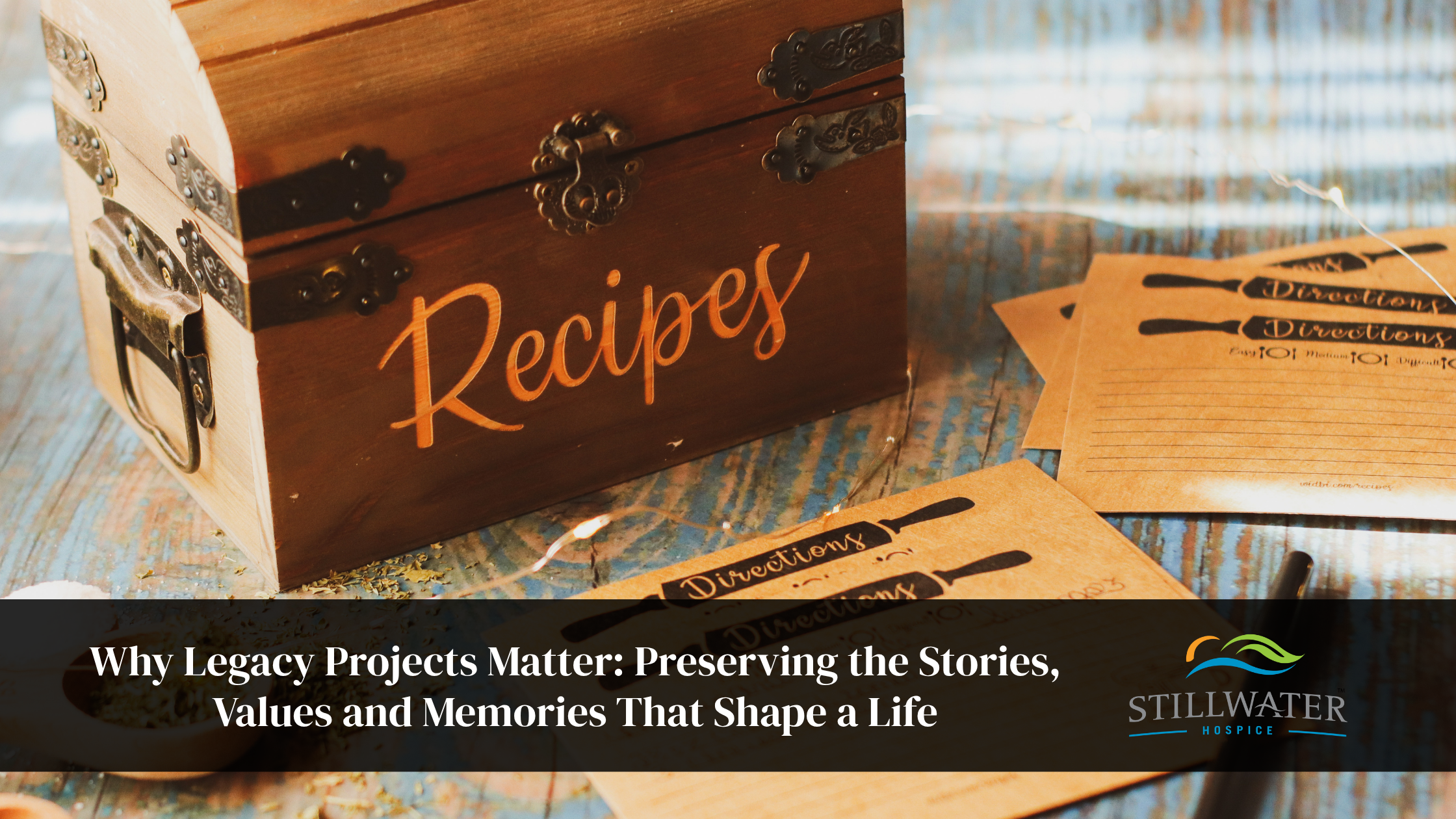
As families navigate the final chapter of life with a loved one, many look for ways to capture memories, preserve stories, and create something meaningful to hold onto. Legacy projects offer a powerful way to do this. They help families shift the focus from illness to connection, from fear to reflection, and from loss to love that continues.
Legacy projects are not about perfection. They are about presence, intention, and honoring the unique life of the person you love. These projects often become cherished keepsakes that bring comfort long after a loved one has passed.
Simple, Meaningful Ways to Capture Memories
Legacy projects do not need to be complex to be meaningful. Some of the most powerful ideas are simple acts that reflect a person's unique personality, values, and history.
Families often create legacy by:
gathering handwritten notes, cards, or letters
recording stories or life lessons shared at the bedside
creating a photo album or digital slideshow
collecting favorite recipes with memories attached
writing down small details of everyday moments
These projects remind families that even in the final days, connection is possible.
Audio and Video Keepsakes
Technology makes it easier than ever to capture someone's voice, stories, or reflections. These recordings often become treasured keepsakes for children and grandchildren.
Audio or video legacy ideas include:
recording a loved one reading a favorite poem or quote
filming short conversations about meaningful life events
capturing bedtime stories for young family members
creating a "message for future milestones" series
compiling family interviews into a shared video
These recordings allow a loved one's voice and presence to live on.
Creative and Artistic Legacy Ideas
Art offers a beautiful way to express love and memory. Even small creative projects can become lasting reminders of connection.
Families may create:
fingerprint or handprint art
pressed flowers from meaningful places
quilts or blankets made from clothing
memory boxes filled with small keepsakes
painted rocks or artwork representing special moments
These items become tangible reminders of a life lived with meaning.
Projects That Celebrate Storytelling
Every person has stories worth preserving. Hospice is often a time when memories surface—moments of joy, hardship, growth, and transformation.
Story-driven legacy projects include:
writing a short autobiography together
creating a "favorite memories" journal
compiling a list of life lessons or values
gathering family stories and tying them into a keepsake book
writing letters to children or future generations
These projects help families reflect, laugh, cry, and celebrate a lifetime of experiences.
Legacy Through Acts of Kindness
Not all legacy projects are physical. Some are built through action—kindness carried forward in honor of a loved one.
Families may choose to honor their loved one by:
performing acts of kindness on special dates
donating to a cause that mattered to them
planting a tree, flowers, or a small garden
organizing a volunteer day or memorial gathering
creating a tradition that the family can recreate each year
These acts keep a loved one's spirit alive by expressing compassion outwardly.
Involving Hospice Teams in the Process
Hospice teams often support legacy projects by offering guidance, resources, and creative ideas. Social workers, chaplains, and volunteers can help families explore what feels meaningful and manageable.
They are supported by:
helping families choose the right project for their loved one's energy level
offering prompts for storytelling or reflection
providing supplies for simple crafts
creating space for quiet, intentional moments
helping families navigate emotional responses during the process
Legacy work is part of holistic care—honoring not only the patient's comfort, but their story.
Finding Healing Through Creation
Legacy projects give families something to hold onto during and after their loved one's final days. They offer a sense of purpose, connection, and healing. They help families focus on what was beautiful, unique, and worth celebrating about a person's life.
Most of all, legacy projects remind families that love does not end. It continues—through stories told, traditions carried forward, and memories preserved with tenderness.
In creating something together, families often discover moments of joy, peace, and closeness that become part of the legacy itself.
