

The Myth of “Giving Up” in Hospice
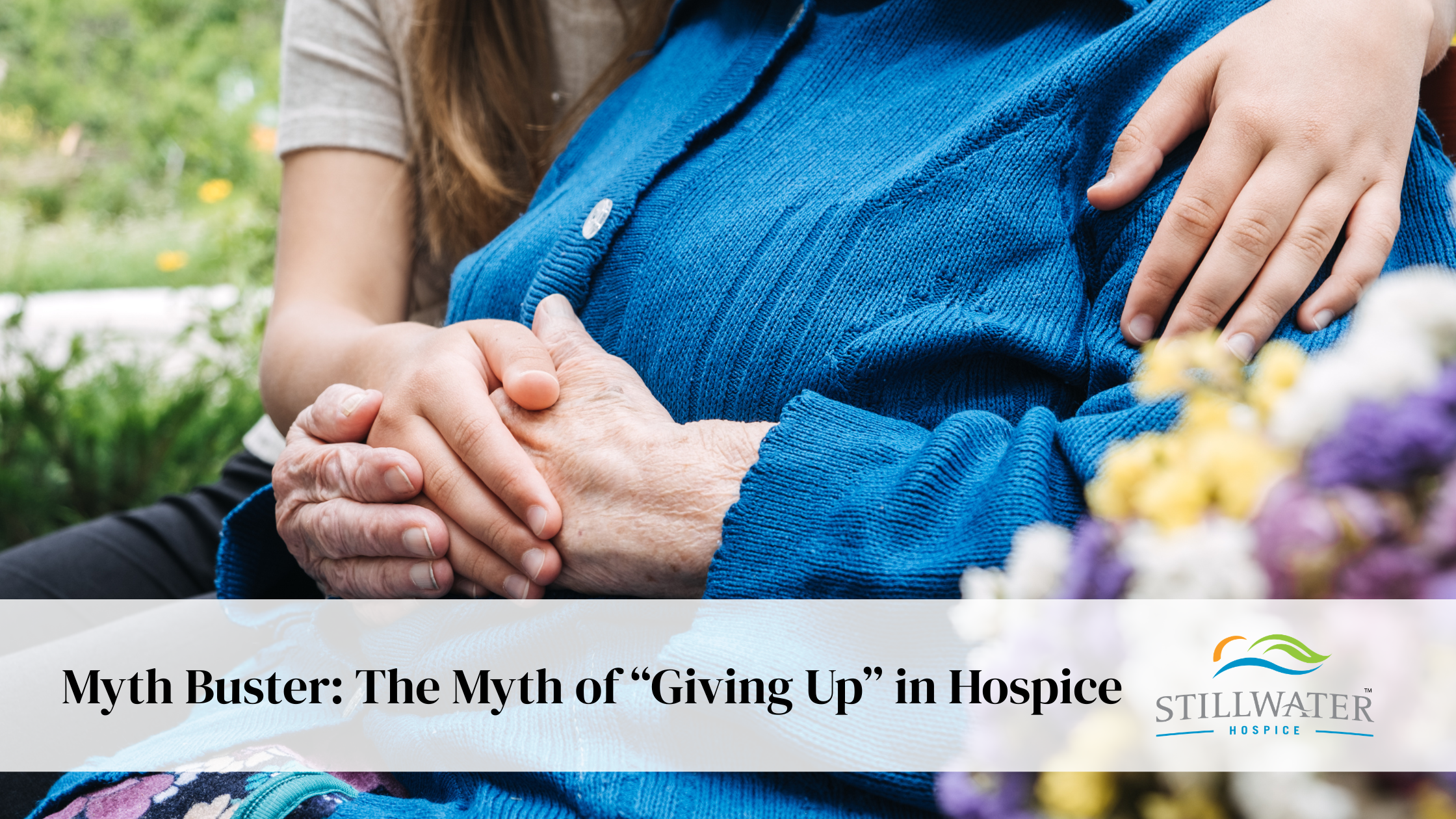
One of the most common misconceptions about hospice care is that choosing it means “giving up.”
Giving up on treatment.
Giving up on hope.
Giving up on life.
But hospice is not about giving up.
It’s about shifting focus—toward comfort, quality of life, and meaningful time.
What Hospice Really Means
Hospice care begins when curative treatment is no longer the primary goal, or when the burdens of treatment outweigh the benefits.
This doesn’t mean care stops.
In many ways, it becomes more intentional.
Hospice focuses on:
Managing pain and symptoms
Supporting emotional and spiritual well-being
Providing comfort and dignity
Helping patients live as fully as possible, for as long as possible
It is a different kind of care—but it is still very much care.
Choosing Comfort Is Not the Same as Giving Up
For many patients and families, hospice is a decision rooted in clarity, not defeat.
It is the recognition that time matters—and how that time is spent matters even more.
Instead of frequent hospital visits, invasive treatments, or uncertainty, hospice allows patients to:
Remain in a familiar environment
Spend more time with loved ones
Experience fewer disruptions and more peace
This shift often brings a sense of relief—not only to patients but also to their families.
Hope Doesn’t Go Away—It Changes
Hope is often misunderstood in the context of hospice.
It doesn’t disappear. It evolves.
Hope may look like:
A day without pain
A meaningful conversation
Time spent at home
The ability to be present with family
Hospice supports these moments, helping patients and families focus on what matters most in this stage of life.
Support for the Whole Family
Hospice care extends beyond the patient.
Families are supported throughout the process through education, guidance, and emotional care. This includes:
Help navigating what to expect
Access to social workers and spiritual care
Ongoing bereavement support after loss
This level of support can ease uncertainty and provide a sense of stability during a difficult time.
Earlier Support Can Make a Difference
Another common misconception is that hospice is only for the final days.
In reality, earlier access to hospice care often leads to better symptom management, stronger support systems, and more meaningful time together.
Waiting too long can limit the full benefit hospice is designed to provide.
Where Stillwater Hospice Comes In
At Stillwater Hospice, care is centered on dignity, comfort, and connection.
Our team works alongside patients and families to provide support that is both compassionate and practical—meeting each person where they are.
Choosing hospice is not about giving up.
It’s about choosing how to live—fully supported, with intention, and with care that honors each individual’s journey.
Because at the end of life, what matters most isn’t giving up.
It’s being cared for in the way you deserve.
