

Hospice Is Never Just One Person
How the Interdisciplinary Team Works Together
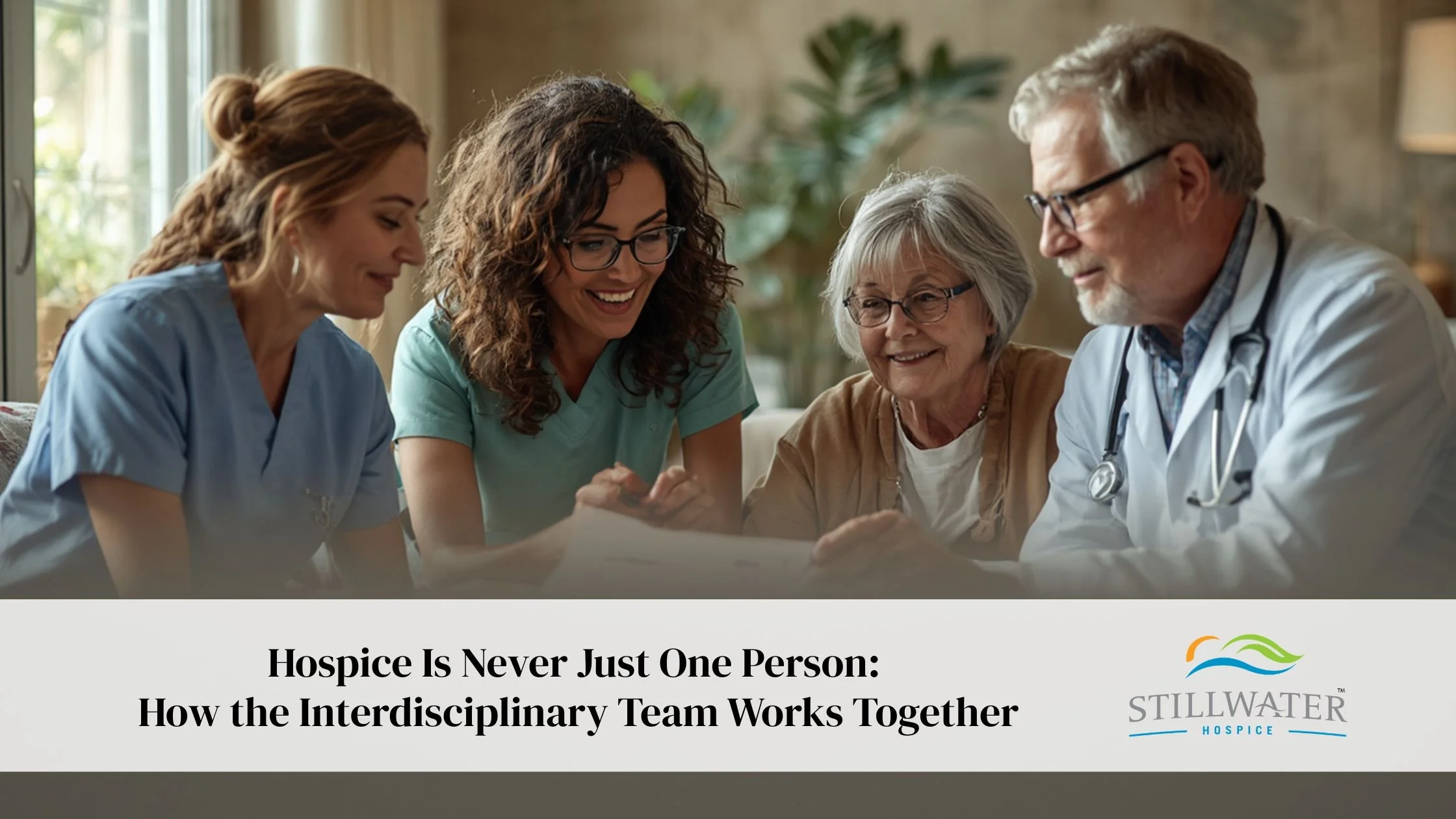
When most people think about hospice, they picture a nurse. While nurses are certainly at the heart of hospice care, they’re only one part of a larger team working together to support patients and families. Hospice is built around a simple but powerful idea: no single person can meet every need someone may experience at the end of life.
Physical symptoms are only part of the picture. Families may need emotional support, caregivers need education, and patients may have spiritual questions, difficult decisions to navigate, or simply need someone to listen. That’s why hospice care is provided by an interdisciplinary team.
Every Team Member Brings Something Different
Your hospice team may include:
Registered Nurses (RNs) who monitor symptoms, coordinate care, educate families, and communicate with physicians.
Certified Nursing Assistants (CNAs) who help patients remain comfortable with personal care while preserving dignity and independence.
Medical Directors who oversee medical care, collaborate with primary providers, and help ensure patients receive treatments focused on comfort and quality of life.
Social Workers who help families navigate practical challenges, provide counseling, connect them with community resources, and offer guidance through difficult conversations.
Spiritual Counselors who support people of every faith—or no faith at all—helping patients and families find meaning, peace, and comfort according to their own beliefs.
Bereavement Coordinators who continue supporting loved ones after a loss because grief doesn't end when hospice services do.
Volunteers who offer companionship, respite, and meaningful moments that often become lasting memories.
Communication Is Everything
One of the greatest strengths of hospice is that these professionals don't work independently. They work together.
Throughout a patient's care, the team regularly meets to discuss changing needs, review goals, adjust care plans, and ensure everyone is working toward the same priorities.
A nurse may notice increased discomfort.
A CNA may recognize subtle changes during a personal care visit.
A social worker may identify caregiver stress.
A spiritual counselor may uncover concerns that affect emotional well-being.
Together, those observations create a more complete picture of the patient's needs.
Supporting the Entire Family
Hospice doesn't focus solely on the patient. Families often become caregivers overnight, juggling medications, appointments, emotions, work, and everyday life.
Our interdisciplinary team helps ensure caregivers have education, encouragement, and practical support so they don't have to navigate this journey alone.
Sometimes that support comes through teaching.
Sometimes it's simply having someone answer the phone.
Sometimes it's knowing there's a team already thinking ahead before problems arise.
Better Care Happens Together
Hospice isn't about one heroic provider. It's about a coordinated team of compassionate professionals working together to help every patient experience comfort, dignity, and the highest possible quality of life.
No family should have to carry this journey alone. If you have questions about hospice care, reach out to your local Stillwater Hospice team. We’re here to help.
